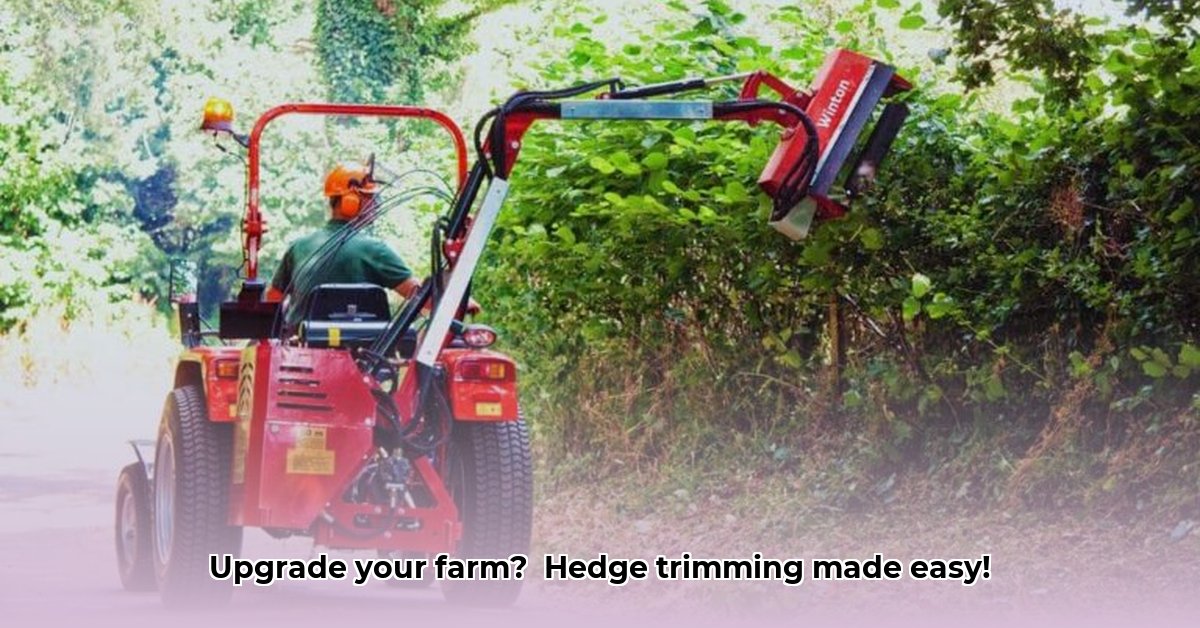
Tractor Hedge Trimmers: Optimizing Farm Operations
Choosing the right tractor hedge trimmer significantly impacts farm efficiency, cost-effectiveness, and overall productivity. This guide provides a technical analysis to help you select the optimal model for your specific needs. We will explore key features, compare different models, and discuss long-term considerations for sustainable agricultural practices. For more heavy-duty options, consider learning more about tractor-mounted wood chippers.
Assessing Your Operational Requirements
Before purchasing a tractor hedge trimmer, carefully evaluate your farm's specific requirements. Consider the following factors:
- Hedgerow characteristics: What types of plants are you trimming? How dense is the growth? What is the average thickness of branches?
- Scale of operation: How much land requires trimming? This will dictate the necessary cutting reach and operating time.
- Budget: Set a realistic budget that encompasses both initial purchase and ongoing maintenance costs.
- Tractor compatibility: Ensure your tractor has the required horsepower and hydraulic capacity for the selected trimmer. Improper matching can lead to inefficiencies and potential damage.
Evaluating Key Features of Tractor Hedge Trimmers
Several critical features differentiate tractor hedge trimmers. Understanding these differences is crucial for making an informed decision.
- Cutting Reach (feet): This determines the horizontal distance the trimmer can reach from the tractor. Longer reach translates to faster operation but generally increases weight and cost. Consider the average width of your hedgerows.
- Cutting Diameter (inches): This specification indicates the maximum branch thickness the trimmer can handle. Overestimating this can lead to jams or damage to the trimmer.
- Cutting Mechanism: Different mechanisms exist, including single blades, dual blades, and sickle bars. Sickle bars are best suited for dense, thick growth but require more frequent maintenance. A single-blade system may be sufficient for lighter trimming tasks.
- Power Source: Hydraulic systems are common, offering precise control and substantial power. However, your tractor must have a compatible hydraulic system. Consider fuel efficiency and environmental impact.
- Safety Features: Prioritize safety features such as breakaway mechanisms to prevent damage to the trimmer and operator in case of unforeseen obstacles. This is a crucial investment in long-term productivity and safety.
Comparative Analysis of Tractor Hedge Trimmer Models
The following table provides a comparative overview of hypothetical models. Note that actual specifications vary across manufacturers and models. Always consult the manufacturer's specifications for precise details.
| Model | Cutting Reach (feet) | Cutting Diameter (inches) | Power Requirement (HP) | Weight (lbs) | Manufacturer | Cutting Mechanism | Safety Features |
|---|---|---|---|---|---|---|---|
| Model A | 10 | 12 | 20 | 440 | XYZ Co. | Dual Blades | Breakaway System |
| Model B | 16 | 16 | 40 | 770 | ABC Inc. | Sickle Bar | Breakaway System, Automatic Shutoff |
| Model C | 7 | 8 | 15 | 330 | DEF Corp | Single Blade | Breakaway System |
Long-Term Considerations and Cost Analysis
The initial cost is not the sole determinant of value. Factors such as maintenance frequency, repair costs, and fuel consumption play a significant role in the overall cost of ownership.
- Maintenance: Regular maintenance, including blade sharpening and lubrication, is essential for optimal performance and lifespan. Consider the ease of access to replacement parts and the cost of service.
- Repair Costs: Unexpected repairs can significantly impact profitability. Choose a robust, well-engineered model with a proven track record of reliability.
- Fuel Consumption: Fuel efficiency directly influences operating costs. Consider the power source and its impact on both fuel expenses and environmental sustainability.
Environmental Impact and Sustainable Practices
Sustainable agricultural practices encompass minimizing environmental impact. Consider these factors:
- Fuel Efficiency: Opt for models with efficient power systems to reduce fuel consumption and greenhouse gas emissions.
- Noise Pollution: Minimize noise pollution by choosing quieter models, especially when operating near residential areas.
- Waste Management: Responsible disposal of worn parts and used fluids is crucial for environmental stewardship.
Choosing the Right Tractor Hedge Trimmer: A Step-by-Step Guide
- Assess your needs: Determine your acreage, plant type, and budget.
- Research models: Compare specifications, focusing on cutting reach, diameter, power, and safety. (See table above for example.)
- Consider long-term costs: Factor in maintenance, repairs, and fuel consumption.
- Prioritize safety: Choose a model with sufficient safety features.
- Select a sustainable option: Consider fuel efficiency and environmental impact.
- Consult experts: Discuss your options with experienced farmers and equipment specialists.
By carefully following these steps, you can select a tractor hedge trimmer that optimizes farm efficiency while promoting sustainable agricultural practices. Remember, your choice is a significant investment; thorough research will maximize both productivity and long-term cost-effectiveness.